logo
Goede prijs  online

details van de producten

Created with Pixso. Huis Created with Pixso. Producten Created with Pixso.
De Hars van het Dicyandiamideformaldehyde
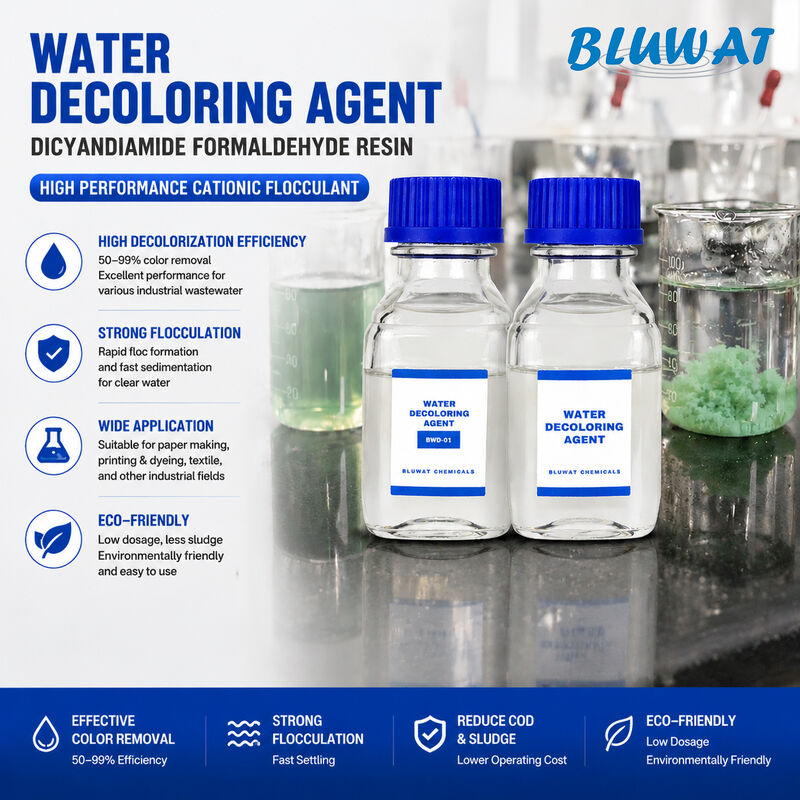
Created with Pixso. Liquid Dicyandiamide Formaldehyde Resin – Polycationic Flocculating Agent for Papermaking Wastewater Treatment

Liquid Dicyandiamide Formaldehyde Resin – Polycationic Flocculating Agent for Papermaking Wastewater Treatment

Merknaam: BLUWAT
Modelnummer: BWD-01
MOQ: 1000 KG
Prijs: onderhandelbaar
Gedetailleerde informatie
Plaats van herkomst:
China
Certificering:
ISO9001, SGS, BV
Chemische naam:
de hars van het dicyandiamideformaldehyde
CAS-NR:
55295-98-2
Een andere naam:
Ontkleurend polymeer
Verschijning:
Kleurloze vloeistof
stevige inhoud:
50%min
Molecuulformule:
C2H4N4·CH2O (bij benadering)
Sollicitatie:
De Verwijdering van de afvalwaterkleur
Oplosbaarheid:
Oplosbare stof in water en alcohol
Gratis monster:
Ja
Productiecapaciteit:
30000tons
Chemische eigenschap:
Het Polymeerstollingsmiddel van kationen
Chemische verbinding:
Het Chemische product van de kleurenverwijdering
molecuulgewicht:
Varieert afhankelijk van de polymerisatie
Origineel:
Yixing, Jiangsu, China
Verpakking Details:
30kgs, 50kgs, 250kgs, 1250kgs-trommels
Levering vermogen:
1000 ton/w
Productomschrijving

Liquid Dicyandiamide Formaldehyde Resin – Polycationic Flocculating Agent for Papermaking Wastewater Treatment

High-efficiency polycationic flocculant for papermaking and industrial wastewater, improving water clarity, fiber recovery, and sludge dewatering.

Product Overview

This liquid Dicyandiamide Formaldehyde Resin polycationic flocculant is designed for papermaking and industrial wastewater treatment, providing rapid floc formation, improved water clarity, and efficient solids separation. It is suitable for white water clarification, fiber recovery, and sludge dewatering in paper mills.

  • High cationic charge for effective destabilization of colloids
  • Rapid formation of dense flocs
  • Compatible with pH 6–9
  • Reduces sludge volume and improves effluent quality

Bluwat Chemicals offers daily lab jar tests to recommend the optimal dosage based on real wastewater, ensuring reliable and reproducible results.

Cause

Papermaking wastewater contains high levels of suspended solids, colloids, and residual chemicals. Conventional coagulants often fail to remove fine fibers and micro-colloids, leading to:

  • Poor water clarity
  • Slow settling rates
  • Excessive sludge volume
  • Higher chemical consumption

Solution

This polycationic flocculant works via:

  • Charge neutralization: destabilizes negatively charged fibers and colloids
  • Adsorptive bridging: binds multiple particles into dense flocs
  • Rapid floc formation: enables fast sedimentation and dewatering
  • Improved retention and drainage: enhances papermaking efficiency

Recommended treatment sequence:

  1. Add Dicyandiamide Formaldehyde Resin
  2. Adjust pH if necessary (6–9)
  3. Add PAM to accelerate floc settling

Specifications

Attribute Specification
Product Name Liquid Dicyandiamide Formaldehyde Resin Polycationic Flocculant
Appearance Light yellow to amber liquid
Solid Content ≥ 45%
Ionic Nature Strong cationic
pH 6–9
Solubility Fully water-soluble
Viscosity 50–300 cps
Storage Cool, dry place
Shelf Life 12 months
Packaging 25 kg / 250 kg / 1250 kg IBC

Application Scenarios

  • Papermaking Industry: white water clarification, fiber recovery, sludge dewatering
  • Pulp Mills: enhances retention and drainage
  • Industrial Wastewater: removal of suspended solids, fine fibers, and colloids

How It Works

  • Cationic polymer neutralizes negative charges on particles
  • Bridging effect forms larger, denser flocs
  • Rapid settling reduces chemical usage and improves water clarity
  • Fully compatible with downstream mechanical dewatering or sedimentation systems

How To Choose

  • Analyze wastewater characteristics (TSS, COD, pH)
  • Choose based on target solids removal and effluent clarity
  • Perform jar test to optimize dosage and floc formation
  • Adjust process sequence for integration with PAC or PAM if needed

FAQ

Q1: Can this flocculant handle high fiber content wastewater?

Yes, its strong polycationic charge makes it effective for fine fibers and colloids.

Q2: Is jar testing necessary?

Absolutely. Wastewater characteristics vary, and jar tests help determine the optimal dosage.

Q3: Can it be used with PAM?

Yes, PAM enhances floc density and accelerates settling.

Q4: What is the typical dosing range?

Generally between 5–50 mg/L, depending on solids content and water characteristics.